20 (More) Strange and Exotic Endangered Species


The bladder-chewing guppy not enough for you? Can’t stop thinking about exploding ants, boyfriend-devouring she-monsters of the sea and blood-spurting lizards? Don’t worry – terrifying oneself is a common ailment of the intertubes. Unfortunately, there is no cure…but there is more to learn! Reader, prepare thyself. Your eyeballs are about to be flooded with some of the strangest, creepiest, crawliest endangered creatures on the planet. Warning: content best consumed as far away from bedtime as possible.

Mexican Walking Fish

(Image via dillheady)

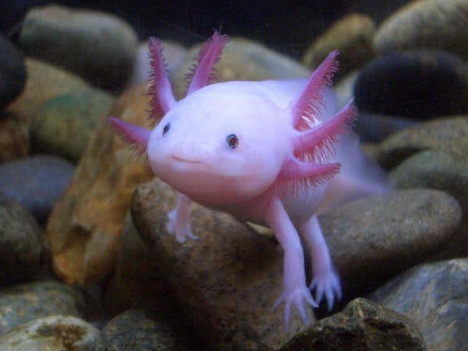
The Mexican walking fish is on the verge of extinction. It’s a caecilian (more about that in a bit), and it lives in – where else? – the waters off Mexico. It’s also important because it will be the only cute animal in this entire post. Awww. It really is cute, isn’t it? It’s always nice to start things off gently. Digital foreplay, if you will.

Goliath Bird Eating Spider
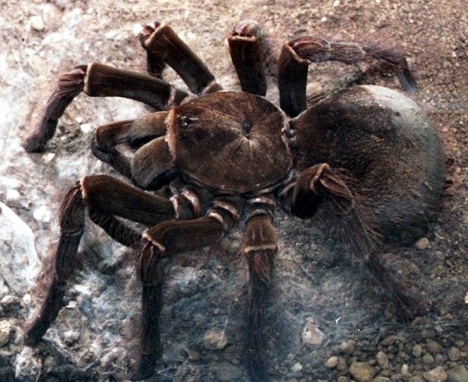
(Image via cirrusimage)

Only the biggest spider on earth, this plate-sized bird-gnawing beast actually prefers to feast on smaller fare, like bats, bugs, and annoying children. In other words, the bird-eating spider rarely eats birds. Sure. Anyway, like its tarantula cousin below (the whistling spider) the Goliath or bird-eating spider is at risk due to its Amazonian habitat destruction. Though tarantulas are scary, they’re fairly harmless to humans.

Whistling Spider
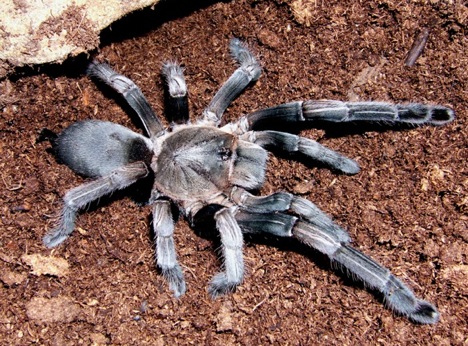
(Image via arachnoboards)

Here, human human human human. Good human! The whistling spider is able to emit a distinctive whistle by rubbing its legs together. What, you thought spiders had lips? How else would they whistle! It’s a vital part of its native ecosystem and while it is not critically endangered, habitat destruction puts this important species at risk.

Chinese Giant Salamander
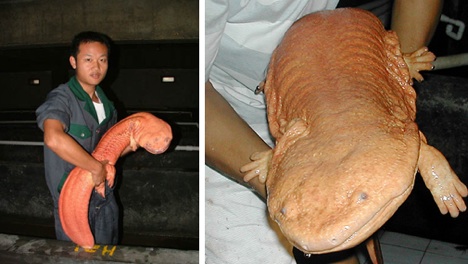
(Images via xinhuanet and ZSL)

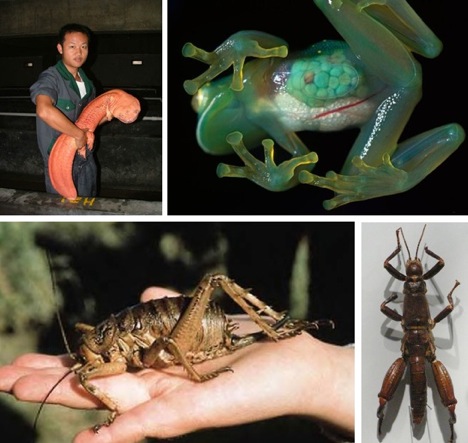
Something tells us these giant salamanders were never called for in any witch’s recipe. Seriously, look at that thing! That lives under some people’s porches! The United States is also home to a giant salamander called the Hellbender, and it’s…well, the name fits. However, it is not as endangered as the shockingly strange-looking Chinese cousin. The Chinese giant salamander can grow to be nearly six feet long.

Lord Howe Island Stick Insect
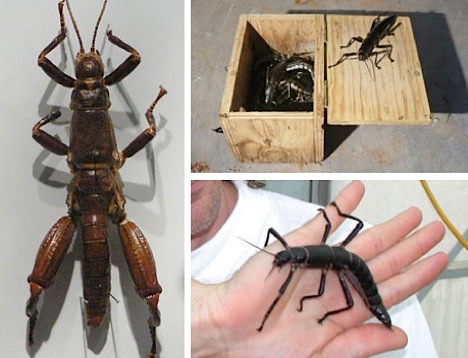
(Images via cane toad warrior, aqob and the Age)

Delightfully crisp! Kidding, kidding. There are hundreds of stick insects, but the Lord Howe Island stick insect is by far the most critically endangered of all of them. It can grow to five inches in length; but don’t worry, it’s not poisonous. Just crunchy.

Weta
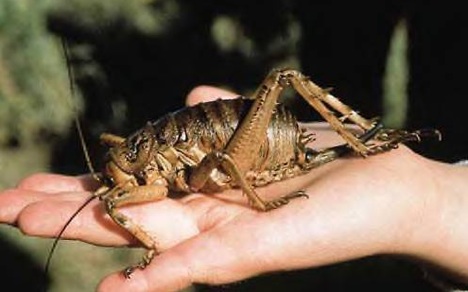
(Image via basenotes)

Think of this cheery critter as you would a common mouse: not terribly enjoyable to have underfoot, but vital to the ecosystem all the same. The weta is native to New Zealand and while it’s something of an icon thanks to Peter Jackson, non-native species, pest eradication and general ugliness (which really can’t be helped now, can it?) have all contributed to the sad plight of the weta. There are actually over 70 species of weta, with 16 being endangered or at risk. The giant weta was thought to be extinct, but a new population was recently found. They aren’t the cutest bugs around, but they are  harmless and besides, they put up with your mug, don’t they?

Giant Water Bug

The inspiration for Alien? The palm-sized giant water bug possesses a syringe-like tooth that bores into its prey, injects a toxic venom that liquefies the animal’s insides, and then…meat’s back on the menu! One of the favorite treats of Giant Water Bugs that live in the Amazon is the piranha. If that tells you anything. Why would we want something so bad ass to go extinct? It’s not like other animals are waiting around to eat piranhas.

Frigate Island Beetle
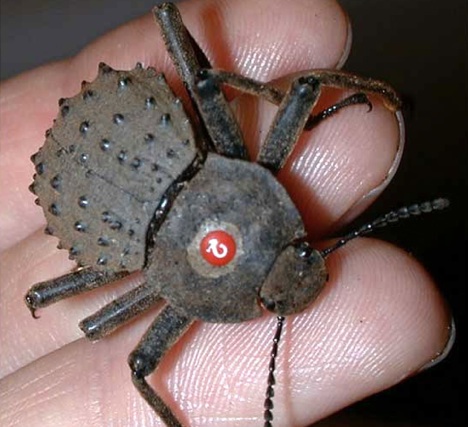
(Image via Endangered Ugly)

Put anything in a place where it’s hot and wet 99% of the time, and it will grow. Whether it’s a fern, a vine or a dear-Jeebus-that’s-horrifying beetle, things just come bigger in the tropics. The seriously endangered and geographically unique Frigate Island Beetle is no exception. It’s the largest of the tenebrionid beetles and the most at risk. If you ever leave the internet long enough to visit Frigate Island and you pick up a beetle and it stains your hands and clothes with a “musky” scented purple ink, put that little guy somewhere safe! You’ve just happened upon a Frigate Island beetle.

Giant Palouse Earthworm
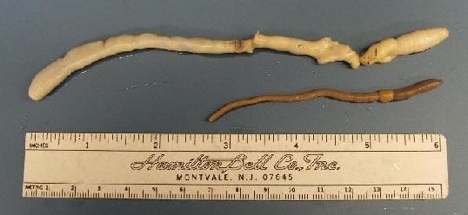
(Image via ecoscraps)

At lengths of up to one foot, the Giant Palouse is the largest earthworm on earth. It’s quite harmless, but unfortunately it’s endangered all the same. It lives in Eastern Washington State and Idaho and was thought to be extinct until 2005, when a student discovered a living specimen. Previous sightings hadn’t happened since the 1980s. Part of the reason it’s so hard to find the Giant Palouse? They burrow 15 feet into the ground.

Giant Coconut Crab
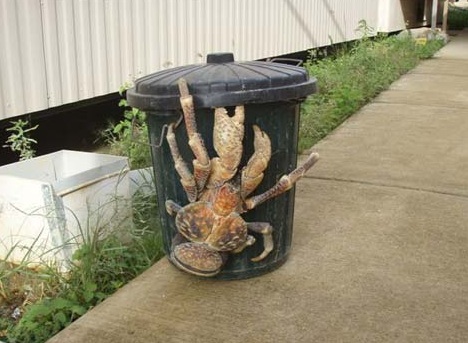
(Image via kottke)

This is not shopped. This is not a hoax. That is a giant crab on a garbage can. They’re native to Guam and other Pacific islands. Coconut crabs aren’t endangered, per se, but due to tropical habitat destruction they are at risk. In WWII, American soldiers stationed in the Pacific theater wrote home with tales about entire atolls being covered in the armor-plated giants. These crabs can crack a coconut in one swipe; but they’re generally too slow to be very dangerous to humans. Children pass lazy afternoons by picking the crabs off tree trunks and watching them crash to the ground; it’s reportedly great fun. And kind of messed up.

Crinoid Snapping Shrimp
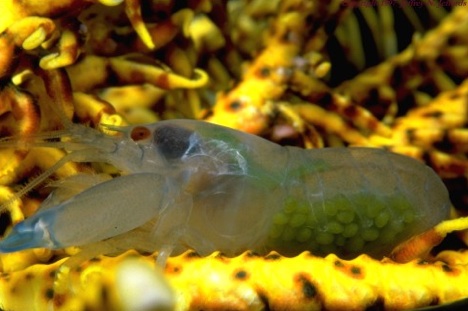
(Image via divegallery)

The tiny Crinoid snapping shrimp is the tiniest of all the snapping shrimp, and the only one that is endangered. The snapping shrimp is often called the pistol shrimp because it comes with its very own “gun” by which it makes a loud cracking, shooting noise. It really only shoots air, but the stun gun is enough to knock out prey foolish enough to swim past.

Honduran Ghost Bat
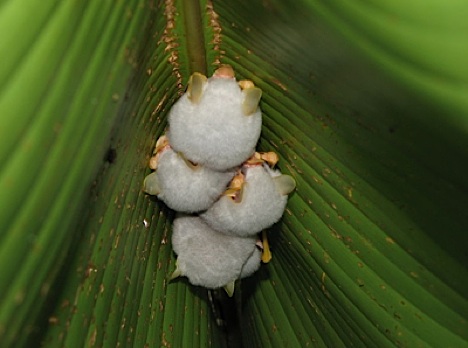
(Image via wonderful world of animals)

The Honduran ghost bat is not officially endangered, but many American ecologists consider it to be threatened due to rainforest habitat destruction and climate change. It is unique, both for its tiny size (just a few centimeters) and its pale coloring.

Mallorcan Midwife Toad
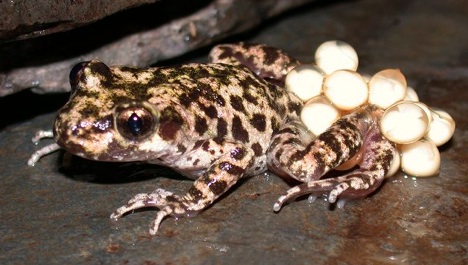
(Image via arkive)

The Mallorcan Midwife toad…is a dude. In a gender-bender twist that seems to occur a lot in the frog world, this toad swaps child-bearing and child-rearing duties. The father serves as a surrogate for the tots until they hatch, and even cares for them after. Mom, meanwhile, hunts and generally stays out partying every night. Females will even compete with each other for mating rights, much like males of other animal species.

Quacking Frog
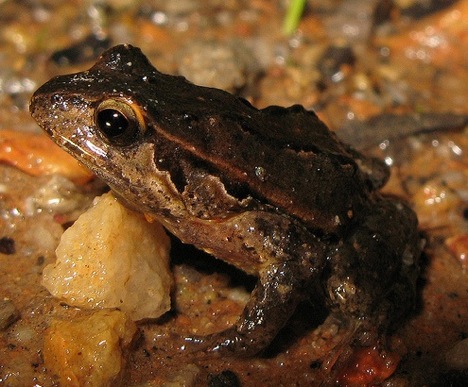
(Image via liquidghoul)

The quacking frog makes a sound that is just like a small duck. Go on, listen! Unfortunately, like many frogs, the quacking frog is endangered. Scientist are particularly concerned when frogs disappear or show signs of stress, because frogs are considered indicator species.

Glass Frog
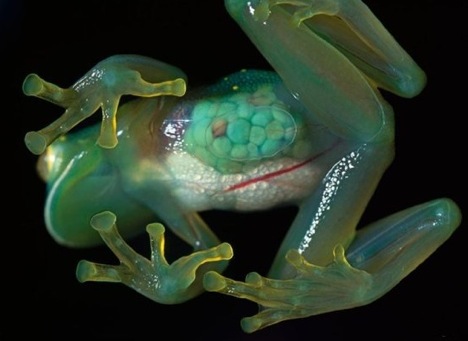
(Image via about:blank)

The glass frog is endangered, as well. And absolutely stunning, so it would be a shame if we let it die out. Note the visible organs in this beautiful specimen. Unfortunately, with tropical rainforests in Central and South America threatened (in some places, the problem is actually worse than it was in previous decades), the glass frog may go extinct.

More Legless Amphibians: the Icthyophis Kohtaoensis
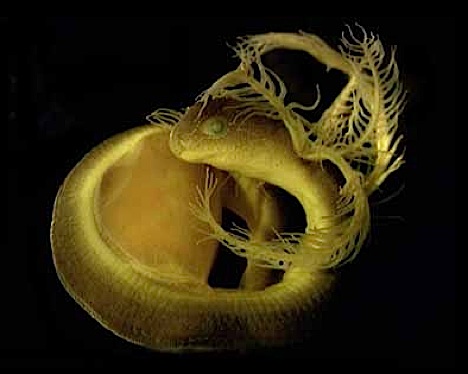
(Image via Berkeley)

There are actually a number of legless amphibians, but some of the strangest ones have tentacles sprouting from their heads. They’re known as caecilians, and some of them have some really unusual physical adaptations for a number of functions (the Mexican Walking Fish at the top of this post is just one). One caecilian has a protruding tail-like limb that enables external fertilization, for example. Though they look like soft worms, they have rows of very sharp teeth. There are over 120 species of caecilians around the world that have been discovered so far, but many of them are endangered and we don’t know much about them.

Komodo Dragon
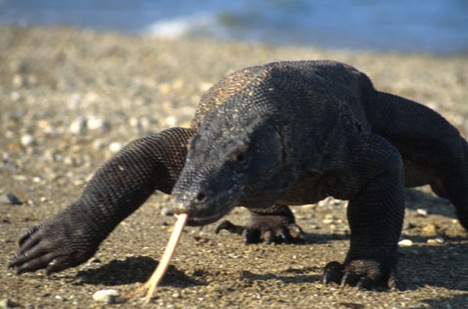
(Image source)

Threatened by both volcanoes and humans, this fascinating prehistoric relic is endangered. At 10 feet and 330 pounds, it is the largest lizard in existence. They have poor hearing and cannot run very fast for very long, instead relying on their sharp eyesight and powers of stealth to hunt. It possesses serrated teeth and has nasty attack habits, preferring to jab at the feet or drag its prey along for a bit before finishing off the deed. If an animal is lucky enough to get away, it will soon die from massive infection thanks to the komodo’s specialized bacteria. Komodos will eat nearly anything, living or dead, including their own young. Unlike the great cats, they will also eat nearly all of their kill, even the intestines, although they do swing those around to expel the feces first as they really don’t like excrement. For this reason, baby komodos roll themselves in feces to avoid being eaten.

Kagu
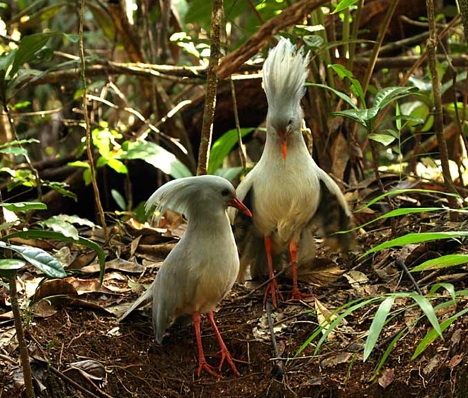
(Image via tropical birding)

A rare New Zealand bird, not much is known about the enigmatic Kagu. It is flightless, though its wings are large; it is a forest-dweller, though its markings are oddly light in color. Very few remain and scientists know little about its preferences and habits. We do know that it possesses “nasal corns” unlike any other bird. For reasons unknown, the kagu also has one-third the red blood count of other birds. Scientists have had a difficult time classifying this rare and unusual bird.

Hairy Nosed Wombat
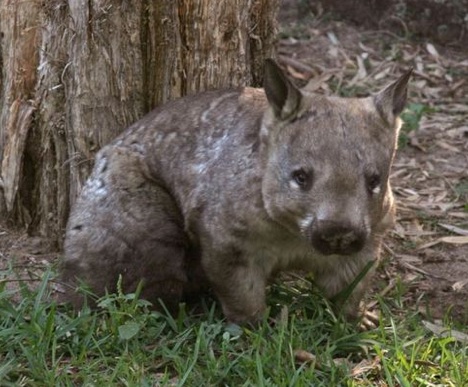
(Image currumbim)

Though it looks similar to the standard wombat, the hairy nosed wombat possesses some unique features. Among the rarest mammals in the world, it has a backwards-opening pouch and is the largest burrowing herbivorous mammal known to humans. The other oddity of the hairy nosed wombat is that its teeth continue to grow throughout its life – now that’s long in the tooth!

Striped Rabbit
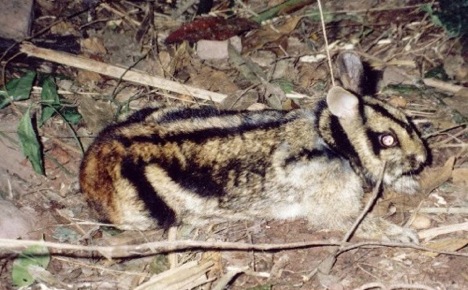
(Image via University of Alberta)

Only discovered within the last decade, the striped rabbit is considered a bit of a scientific novelty owing to its unusual markings. It comes from a region of Burma that has revealed many unusual species previously unknown to scientists, including a miniature deer. Pictures are scarce.


Related WebEcoist Articles & Galleries:

8 Beautiful Endangered Birds

8 beautiful birds that we hope won't go the way of the dodo. Gorgeous pictures of species threatened by habitat destruction, human carelessness, and invasive species.

20 Very Strange Endangered Animal Species

It is mostly the cute and fuzzy endangered animals that flash across your television screen - but what about the strange, bizarre and ugly ones not normally featured?

74 of the World's Strangest Animals

Some of the strangest, most amazing and most threatened species in the world. Some of these animals may appear harmless but are all too deadly while others ...

Click for More Creative Content on Partner Sites:

  • zav
    December 2nd, 2008 at 3:41 pm

    There is a larger earthworm. 6 feet in fact.
    http://www.australianfauna.com.....thworm.php

  • Sergio
    December 2nd, 2008 at 4:04 pm

    Kagu is from New Caledonia, not New Zealand. Great article. Cheers

  • The Glamorous Life Association
    December 2nd, 2008 at 4:36 pm

    This was stragely entertaining and educational. And a little bit disturbing.

    Still I will be back for more. Why? Cuz I am messed up.

    :)

  • Butten
    December 2nd, 2008 at 4:39 pm

    Mexican walking fish… “on the verge of extinction”…? You can buy them in pet stores for $8….

  • Mike
    December 2nd, 2008 at 7:30 pm

    Wouldn’t salt water crocodiles be considered the biggest lizard?

  • Ali
    December 2nd, 2008 at 8:14 pm

    That Chinese salamander thing looks like a penis.

  • Dana
    December 2nd, 2008 at 8:25 pm

    The “Mexican walking fish” is a salamander (not a caecilian) called an axolotl. Axolotls are widely used as lab animals and exist in huge numbers in laboratories, including albinos like the one shown. They are normally dark-colored. Axolotls are extinct or very nearly extinct in their native lagoons in and around Mexico City. Sad I think — they are very cool, but now they’re animals without any real environmental context (labs and pet stores don’t count).

    They are commonly studied partly because they are easy to maintain in labs, but also because they regenerate limbs (a potentially desirable thing for human amputees, like myself).

  • UncaMarty
    December 3rd, 2008 at 12:24 am

    “At lengths of up to one foot, the Giant Palouse is the largest earthworm on earth!”

    What utter rot. Compare http://en.wikipedia.org/wiki/M....._australis – the Giant Gippsland Earthworm. “These giant earthworms average at 100 cm long and 2 cm in diameter but can reach 3 m in length” — Wikipaedia

    http://en.wikipedia.org/wiki/G....._earthworm – “Little is known about the giant Palouse earthworm. The worm is believed to grow up to 1 m (3 ft) in length” — Wikipaedia.

    For crying out loud, get your facts right….

  • mikel
    December 3rd, 2008 at 3:35 am

    such beautiful creatures

  • Duffman
    December 3rd, 2008 at 4:41 am

    “Wouldn’t salt water crocodiles be considered the biggest lizard?”

    Errr … no. Mainly because it’s a crocodile, not a lizard.

  • cam
    December 3rd, 2008 at 6:08 am

    i think the Giant Gippsland Earthworm is longer, the longest one on record was around 4 metres long!

    http://www.australianfauna.com.....thworm.php

  • Josh Lewis
    December 3rd, 2008 at 8:29 am

    The Giant Palouse Earthworm is not the biggest earthworm on earth. It might be the biggest in america but not on earth.

    The honor I believe belongs to the Giant Gippsland Earthworms….
    http://thegreencommunity.org/giant_worms.html

    The Palouse may be endangered and unprotected and that is important to point out how unprotected they are by stubborn sabotaging Bush appointees but if you going to say they are the biggest you might want to make sure that’s actually true.

  • Josh Lewis
    December 3rd, 2008 at 8:32 am

    And thanks for a glimpse at interesting animals. It always a great thing to see.

  • Karen
    December 3rd, 2008 at 10:56 am

    That worm is miniscule compared with the Gippsland giant earthworm. Up to 3m in length!

    http://en.wikipedia.org/wiki/G....._earthworm

  • Yum
    December 3rd, 2008 at 3:33 pm

    I think the Gippsland Earthworm might be the biggest in the world (http://en.wikipedia.org/wiki/Gippsland_earthworm). At 3 metres long you would find it hard to find a hot dog bun to fit it in, whereas most supermarkets would have one for the Giant Palouse.

  • Aussie Bob
    December 3rd, 2008 at 5:20 pm

    The Giant Gippsland earthworm is much larger than the Gian Palouse.

    http://en.wikipedia.org/wiki/G....._earthworm

  • Emily
    December 3rd, 2008 at 5:42 pm

    this was very entertaining and informative, and i love your way of writing! ^^

  • Sweetums
    December 3rd, 2008 at 7:37 pm

    The Giant Palouse Earthworm is not the largest. The Giant Gippsland Earthworms from Australia are much bigger than the Palouse.

    http://en.wikipedia.org/wiki/M....._australis

  • helen
    December 4th, 2008 at 11:05 am

    Thanks to other commenters who have addressed some factual errors on this interesting post. I’ll throw in my 2 cents about the invertebrates. There are giant earthworms in Australia that can get to be several meters long, much larger the earthworm you’ve pictured. I’m skeptical about the snapping shrimp being endangered unless it’s a general tropical reef habitat thing, which would include many, many species, of course. The only marine invertebrate listed by the ESA as endangered is the white abalone. Not nearly so photogenic as the rest of the critters in the gallery. Great coconut crab photo!

  • elna
    December 4th, 2008 at 12:30 pm

    The largest earthworms are actually found in the Eastern Cape, South Africa. They grow to three meters.

  • Ian
    December 4th, 2008 at 12:34 pm

    A one foot worm – a tiny little specimen.
    How about a 6 footer?
    search on gippsland earthworm or
    http://www.dpi.vic.gov.au/dpi/.....88814?open

  • Sueper
    December 4th, 2008 at 1:08 pm

    Mexican walking fish. Axolottle My friend used to breed them.

  • Snoopedu
    December 4th, 2008 at 4:25 pm

    Nossa super interessante, jamais imaginei que existiam animais como esses, ficou muito legal parabens!!!

    Very Good!!!!

  • Kaysie
    December 4th, 2008 at 8:43 pm

    Big props to the people who corrected the axolotl information. Axolotls are endemic to two lakes near Mexico city. They are NOT caecilians, but are salamanders. While wild ones are nearly extinct, captive-bred ones are a dime a dozen (or $10 a piece, which is what I sell my larvae for). The axolotl pictured is not albino, but is leucistic (white with black eyes).

    And Andrias hardly live under people’s porches. They live in glacial streams in remote areas of China and Japan (with the hellbender in the US).

  • Jen
    December 4th, 2008 at 8:53 pm

    Axolotls are not caecilians.

    I don’t think the facts on this page have been checked very well. Interesting pictures though!

  • Bryn
    December 5th, 2008 at 2:57 am

    Oh. Dear. Lord. That weta scares the heck out of me. We have king crickets here in South Africa, locally known as Parktown Prawns. They look exactly like a weta except they’re smaller (thank goodness) and are either a brownish orange or blackish colour. Most people are absolutely terrified of them. I’d be absolutely terrified of a weta if I ever saw one.

  • George
    December 5th, 2008 at 3:58 am

    No, it’s not the biggest earthworm by a long shot – the Gippsland Giant Worm grows to over 5 feet in length!!! I’ve actually seen one.
    You can HEAR them sometimes when playing golf!

    George

  • jonathan
    December 5th, 2008 at 8:31 am

    Yeah, the facts could use some serious verification. But that’s the internet, right?

    Still, AWESOME pictures. Those are the first Giant Chineese Salamander pics I’ve ever come across.

    And I love how the author here describes the giant water bug as “Bad Ass”. That is so fitting. (This is a more general description than the listed link: http://en.wikipedia.org/wiki/Giant_water_bug) I find them out here in NH sometimes, they are almost as terrifying as the Dobson Fly ( Dude, you gotta check this one out: http://en.wikipedia.org/wiki/Dobson_fly)

    BTW, I was sent this link, now I’m a subscriber…

  • chris
    December 5th, 2008 at 5:30 pm

    Quite interesting site, but which bits do you believe? Quite appalling standard of research. If you are going to post something pseudo-scientific, check your facts!
    This is the type of site that makes you realize the net is often a poor source for factual information.

  • Catherin
    December 6th, 2008 at 12:22 am

    Okay, so the writing wasn’t great and the facts should have been checked. This is still a stunning collection, So many fragile, precious lives hang in the balance.

  • Denis
    December 6th, 2008 at 4:10 am

    Wow, i never saw befor so big Giant Coconut Crab!!!
    thx

  • Relentl3ss
    December 6th, 2008 at 9:57 am

    Theres much bigger worms in Perfection, Nevada.

  • mudkipz
    December 6th, 2008 at 11:36 am

    oh hai i c u t00k a pictor of meh

  • M
    December 6th, 2008 at 1:18 pm

    well, lots of comments about worms. . . actually I found one about as long as my back sidewalk and it was still in the ground. but great pictures, amazing.

  • Ken
    December 6th, 2008 at 4:33 pm

    As previously mentioned, factual discrepancies are fairly common on many sites on the Internet. But also fairly common on the Internet, are the comments that true up an already fascinating and informative post. If you think the information on the Internet is questionable, you should browse through a few high school textbooks, which, unfortunately, don’t benefit from ongoing comments from the vast, informed audience.

    Thanks for a really interesting post and for the comments made to clarify things.

    And, to think, I used to never read the comments on sites like this.

  • mohan
    December 6th, 2008 at 6:11 pm

    really interesting species…….very good post…..will create an awareness among people…

  • David / PlanetThoughts.org
    December 7th, 2008 at 4:17 am

    Greetings. I added a review of this article in my StumbleUpon.com page. Thanks for the excellent collection of pictures; it points out that nature is wonderful, and with a bit of additional thought we can realize that we are at risk of stripping the world down to its bare essentials, and then going beyond that to where it can not properly support life.

    Do we want a planet where the only animals are humans, cows, dogs, cats, and cockroaches? Kind of boring, and sad. It will be up to individuals AND our governments to change rapidly our global way of life.

  • Kabe
    December 7th, 2008 at 3:22 pm

    The Kagu bird is from New Caledonia .. not New Zealand

    Not being picky, just helping. Enjoyed the site.

  • Scott
    December 7th, 2008 at 3:42 pm

    These are very cool, thanks for the post! What a wonderful world we live in…isn’t evolution great!

  • Griza
    December 7th, 2008 at 9:59 pm

    Not to nit-pick further, but if the Hairy Nosed Wombat is indeed a wombat with a pouch, then it is a marsupial, not a mammal, right?

  • why
    December 8th, 2008 at 6:14 am

    wow

  • ILiekMudkipz
    December 8th, 2008 at 8:46 am

    It’s a shame that first one is going extinct.

    Everyone liekz Mudkipz.

  • Saywhat
    December 8th, 2008 at 9:21 am

    The gippsland worm actually grows to be 3 feet long, they stand on their tip toes persay, streatch to get that 6 feet, and up to 10 feet. But even fully stretched out they are still dwarfed in length by the souh sfrican giant earthworm

    South Africa: The South African Giant Earthworm grows to be up to 22 feet and is the largest earthworm known. The record-setting specimen was found beside a road in William’s Town, South Africa, in 1967. The worms normally grow to only about six feet. (Did I say “only”?)

  • Tarmak
    December 8th, 2008 at 5:07 pm

    WTF!!! the Kagu isn’t a new zealand bird, it’s native from new caledonia, a french island located at the east of autralia and north of new zealand… shame on you for having so wrong informations =P =D

  • Melissa Hedwall
    December 8th, 2008 at 10:09 pm

    I hate to say this but I think this article is full of shit.

  • someone with sense
    December 10th, 2008 at 1:48 am

    I don’t think the majority of people should leave a post about a bigger worm…ITS THERE ALREADY…READ YOU MORONS…HOW MANY PEOPLE ARE GOING TO KEEP SAYING THE SAME THING OVER AND OVER?!?! HOW MUCH MORE STUPIDITY WILL THERE BE?!?!

  • Goulash
    December 10th, 2008 at 7:35 pm

    Griza, just to clear up your question…

    The wombat is a marsupial mammal.
    A mammal is any animal with milk producing nipples (mammary glans: thus the name mammal). Humans and other mammals are known as Placental Mammals.

    Marsupials have a pouch, but inside this pouch are mammary glans to feed the young.

    Another interesting mammal to look at is the monotreme. It lays eggs, but has mammary glans. The platypus and echidna (looks like an ant-eater) are both monotremes.

  • grdnrofeden
    December 11th, 2008 at 6:54 pm

    eeeewwwww! I would so freak out if one of those things was on my garbage can! Seriously though, these are very interesting. Thanks.

  • Mari
    December 12th, 2008 at 7:50 am

    Giant Coconut Crabs are so cool! But so freaky! I think it would be cool to touch one of those giants!

  • Mari
    December 12th, 2008 at 8:02 am

    The komodo dragon can run 30 miles per hour! But only for a short time. They can climb real well, and they can swim excelently ! How do you escape them!? Run zigzag! They can only run 30 miles an hour running straight! That article is so wrong about them!

  • ray
    December 30th, 2008 at 7:19 pm

    this is nonsense

  • Phil
    December 31st, 2008 at 7:50 pm

    The Giant Palouse Earthworm is not the largest earthworm!!

  • Danny
    January 2nd, 2009 at 1:47 pm

    I don’t know what those things are…. kill them!

    j/k :)

  • Annie Bimala
    January 3rd, 2009 at 9:20 am

    interesting news

  • Komano
    January 5th, 2009 at 4:23 pm

    First off Palous not biggest earthworm
    2 Komodo Dragans can only climb 3-5 ft up a tree
    3marsupials are mammals
    4 A platepus does not have nipples, it literally oozes milk out of it’s skin
    5 The fish is fugly
    6 Tarantulas are cute
    7 Komodo dragons are cute.
    8 The bunnys cute
    9 The Honduran Ghost Bats are cute.
    10 My brother says he wants to eat one of those crabs.
    11 this website is full of it.

  • Nikki
    January 8th, 2009 at 12:38 am

    So It’s cool and all that you guys were correcting facts but it is in bad nature to reference wiki as the source of fact correction. That site can be updated by anyone who subscribes so really the information may be no more accurate than the article is. All and all interesting read, never heard of glass frog before, kind of neat. And really, there were “cuter” things to start off with than the Mexican Walking Fish.

  • Janice
    January 8th, 2009 at 12:26 pm

    Eww…thiz b creepin me out.

  • Janice Lau
    January 8th, 2009 at 12:27 pm

    OMG!!!! LOLOLOL,

    these creatures are so amazing.

    the Giant coconut grabbed surprised me !

    but wow. it’s just so amazing.

  • cindy
    January 8th, 2009 at 12:29 pm

    wowww ….dis is koollll…. but it creeps me out lol!!!! :-)

  • Lee Smith
    January 8th, 2009 at 12:34 pm

    Omg !

    this is so awesome !

    yeah ! yeah ! yeah ! yeah ! yeah !

    i cant believe thesee .

    its just is, & the giant coconut crab
    surprised me . but yeah oh wowwww . ( :

  • Lee Smith
    January 9th, 2009 at 12:14 pm

    Omgeeezy !

    i’m hotttttt ! … SYKEEE ! but i’m nice tho.

    i love these species ! .

    but yeaaah ! love youuu guys !!

  • Lee Smith
    January 9th, 2009 at 12:22 pm

    Hii.

    again. i love these species.

    they’re so amazing ! who found the giant coconut crab.

    cos’ it surprised me. but anyways yeah. & also in class were

    learning about the whistling spider so thats why i got to this website.

    so yeeeeeeeeeeaah . & where is the frigate island beetle from ? but anyways

    it’s just awesome . hahahahahaaa ! & i know i ask alot of questions but

    it’s just pretty coooooool . so yeeeaah .

  • Robert Frost
    January 10th, 2009 at 1:31 pm

    Lol. The “Striped Rabbit”. Hmm..which one doesn’t belong?

  • Komana
    January 10th, 2009 at 8:42 pm

    Lee Smith. I’m just going out on a limb here, but I’m pretty sure that the Frigate Island Beetle, comes from Frigate Island. Who knew!
    And Nikki, I’m not using wiki. I live on Komodo Island, cuz, I study Komodo Dragons, for my job. I know this info myself, from personal experiance.
    In other words, my husband got chased down by one, He ran zigzag, and then went up a tree. Apparently from the one nip it got in, he’s TASTY!!! The Komodo Dragon had to be tranqed. At witch point I used it to find out some more in depth
    info. It turned out to be a she, and so after I tagged it(GLEE!!:) ) I gave her a name. It is Komano, and I use to represent the one Komodo Dragon I have ever tagged. So Yay.

  • amy
    January 24th, 2009 at 10:16 pm

    SO beautiful!

  • Dean
    January 31st, 2009 at 10:20 am

    i like the coconut crab :)

  • JesusSlayer
    February 5th, 2009 at 11:16 pm

    nice job compiling the images but your information is crap

  • Liam
    February 6th, 2009 at 7:18 am

    whichever one of you said that platypuses don’t have nipples they do get your facts straight also I noticed alot of these animals are either new zealand or australian

  • Sam
    February 9th, 2009 at 5:07 am

    i dont like the spider……..

  • Banazir
    February 20th, 2009 at 6:46 am

    Amazing creatures…..however I do not mind seeing them stuffed , mounted, and harmless, I will take the scientists’ word of these creepy organisms’ prior capabilities.

  • santa666
    February 20th, 2009 at 7:27 am

    YOU HAVE ALL MISSED THE POINT ENDANGERED ALL DUE TO THE BIGGEST KILLER ON THE FACE OF THE PLANET MAN YES MAN THE ONLY SPECIES. THAT BLUSHES AND NEEDS TO WE ARE KILLING ALL OF IT 80 YEARS AGO 3 BILLION 3,000,000,000 PEOPLE NOW 6.5 BILLION 6.5,000,000,000 WE ARE A SAD SPECIES.

  • Paul (Muad'Dib) Atreides
    February 20th, 2009 at 6:25 pm

    The largest worms are the Shai-Hulud (sand worm) from Arrakis. They can grow up to 400 meters in length and 40 meters in diameter.

  • bob smith ;-)
    February 23rd, 2009 at 10:50 am

    if u inject a xolotl wit iodine it evolves 2 salamander in like 2 weeks :D

  • bob smith ;-)
    February 23rd, 2009 at 11:00 am

    oh and stop moanin about the same thing…

  • Bob
    March 12th, 2009 at 10:36 am

    This is kinda cool. But very disturbing in some ways. It’s cool though..we’re studying these lifecycle like things in Science and well, I guess I’m glad I found this so that I could look up the weird mating cycles of these obscure animals.

  • @NNA
    March 13th, 2009 at 7:26 pm

    ummmm…I have to tell you guyz that the glass frog was created by humans and u cant find it anywhere except some lab in toyoko….it was made by sciencists…..they use 2 mutated frogs to created so ,its a mutation frog.

  • joey richardson
    March 17th, 2009 at 9:04 am

    i loved the pic about the giant coconut crap that thing is huge

  • joey richardson
    March 17th, 2009 at 9:06 am

    i liked the pic about the giant coconut crab that thing is cool it looks if it can eat 1 full male body whole

  • Ebony
    March 23rd, 2009 at 10:21 pm

    Yes, i currently have 5 Axolotls In My Large tank, They are salamanders.

  • hundo
    March 30th, 2009 at 1:06 pm

    hi

  • Star
    April 19th, 2009 at 1:30 pm

    The Komodo Dragon, is actually pretty fast.

    Overall though, interesting list.

  • kayla
    April 21st, 2009 at 7:16 am

    these things r so crazyyyyy!!!!!!!!!!!!!!!!!!!!!!!!!!!!!!!!!!!!!!@the school cillin!!!

  • me
    April 23rd, 2009 at 10:54 am

    wowz this list sux i mean seriously u guys suck [] alot [] lol you need too shut up and get a life youh nerds……. ha…ha…ha… xD

  • DanielleRocks#1
    April 27th, 2009 at 5:55 am

    I think these pics r awesome i have never heard of a coconut crab but all i know is that thing is HUGE!!!! i mean it this thing could probably eat 2-3 coconuts at the same time.

  • Jibbs
    April 29th, 2009 at 7:08 am

    Dude, i love this. !!! Like OH M G.

  • Nikki
    May 3rd, 2009 at 11:04 am

    i love these animals. some of them look really gross but they all play a part in the circle of life. I bet even that huge bug thing on the garbage can has its special place. although we dont like most of their company we “ALL” need them or our species will die of different causes.

  • MIKKI
    May 4th, 2009 at 4:53 pm

    THIS HELPED ME ON MY ENDANGERED ANIMALS PROJECT THANKS

  • tammy
    May 12th, 2009 at 3:31 pm

    All I know is this: if a crab can open a coconut with one whack, I don’t want anything to do with it. HOLY CRAP those are scary looking. Personally, I can go my whole life without EVER seeing any of these creatures and be perfectly happy about it. TERRIFYING.

  • k dawg [&&] a dizzle
    May 17th, 2009 at 6:44 pm

    yo wassup homies me and mah home gurl bn checkin out this shizz [&&] we have decidd dat we gonna rape a lil komodo dragon !! den it will have babies [&&] be fused wif human DNA so it will bee able too run in zig zag and climb trees so yoo biarches bettah watch out koz itll kum for yoo !!

    peace yo

    good luck tryna escape the komodaman draguman

    mwahaha its gonnah get yoo !!

  • Jiki Mal
    May 19th, 2009 at 8:12 am

    Why did that beetle thing have to eat the frog? D:

  • Lilly
    May 31st, 2009 at 12:02 pm

    wo! jeez talk about FREAKY! me and my friends are trying to do a book project on a animal i think i just found what to do it on!!

  • Lilly
    May 31st, 2009 at 12:47 pm

    coolio!!!! HAHAHA : D

  • Sarah
    June 2nd, 2009 at 7:34 pm

    Damn those spiders are disturbing… especially one with phobia of em! had to minimize the page! Great article though~!

  • jim martim
    June 4th, 2009 at 10:31 am

    this web site help me alot on a sicence project on endangered spices

  • adriel
    June 23rd, 2009 at 6:41 am

    dued this is really educational thanks

  • carl jaison
    July 10th, 2009 at 4:17 am

    i would luv 2 have one of those glass frogs!!!!!!!!!!

  • cheetah
    August 24th, 2009 at 2:52 am

    comodo. I like it ,it is really wounderful

Trackbacks

  1. ESPÉCIES MUITO ESTRANHAS E AMEAÇADAS DE EXTINÇÃO « SBM | Super Blog Mossadin
  2. Who wants to see some creepy animals? « Gynomite!
  3. noir et blog - くろ。とブログ» Blog Archive » 見たこともない生物。
  4. Coconut Crabs
  5. Bicho raro « El último que cierre la puerta
  6. Linkdump 22 | ettf.net
  7. 20 animales extraños en peligro de extinción (ING)
  8. Strange & Exotic Endangered Species « What Amuses, Interests & Tickles Me
  9. Attention…ils arrivent | Le guide des égarés.
  10. furiousBlog - in my diatribe » Blog Archive » sloppy seconds
  11. Strange Endangered Species | evilry
  12. Le Webzine! » Archives blogue » Sur une poubelle près de chez vous
  13. Strange, Rare, Endangered Species: Amphibians, Reptiles, Birds, Mammals and More Rare Animals | WebEcoist
  14. Coffee Break « The High Definite
  15. 20 Strange and Endagered Species » Technophobia
  16. Bizarre endangered creatures « Sophismata
  17. Los 20 animales en vías de extinción más extraños del mundo
  18. Blog da Galileu
  19. Strange and endangered wildlife « The Confucius Times
  20. 42 of the World's Strangest Animals | WebEcoist
  21. Popserious » Blog Archive » Eeep! AAAminaaaallls.
  22. links for 2008-12-03 | hxf148
  23. Os 20 mais estranhos e raros animais do mundo. « FunSurfer
  24. Phillip Ayoub » Blog Archive » This will give you the willies
  25. 20 Extrañas criaturas, cangrejo gigante | ruboc - un blog de Rubén Sottolichio.
  26. links for 2008-12-03 « Stand on the shoulders of giants
  27. Sina « karipap daging and the kuih sarang semut
  28. Belle MOustache! |Video drole image comique jeux photo fun
  29. [links] Link salad sniffs the autumn air | jlake.com
  30. Grappi!
  31. Painted Booty Brillance and other assorted tidbits -
  32. Backcountry.com: The Goat » Blog Archive » We Got Nasty Crabs
  33. 20种即将灭绝的神奇生物 | 烧荒W计划
  34. Alternative energy , poisons in your products, and other notable environmental news « Hope2012
  35. Monday’s Link Roundup 12/8 | Dallas McLaughlin
  36. Trabalho Sujo » Arquivo » Leitura Aleatória 213 - OESQUEMA
  37. We Got Nasty Crabs at thegoat
  38. 10 strange endangered species - Dallas Dance Music - Dallas nightlife, music, tickets, and more
  39. 20 Strange, Rare and Exotic Endangered Species | WebEcoist - L3AK Magazine
  40. M.P.K » Blog Archive » My del.icio.us bookmarks for December 3rd through December 16th
  41. 20 Strange and Exotic Endangered Species - The Environment Site Forums
  42. Unlikely Words » Weird Species
  43. Random Thoughts on Life » Strange & Endangered Species -
  44. My del.icio.us bookmarks for November 1st through January 10th
  45. Six Neat Things » Nature Photography, etc
  46. links for 2009-01-31 « pabloidz
  47. Strange Animals: Bizarre, Unusual and Weird Animals | WebEcoist
  48. Strange Animals « Hilary Farlow’s Science News for Students
  49. Most Exotic and Amazing Animal Species | Ellamey Blog|Live Cricket|Online News
  50. Animalia (VII): Ranas de Cristal « [xD]Eksd[/xD]
  51. Animalia (VIII): Olm « [xD]Eksd[/xD]
  52. Animalia (X): Aye Aye « [xD]Eksd[/xD]
  53. 7 Weird Endangered Species Only a Mother Could Love | How Green Is My Blog
  54. 7 Weird Endangered Species Only a Mother Could Love
  55. Eight Legged Freaks! … | rupperadio.com
  56. Virtual Fun Zone » Strange and exotic endangered species
Great Galleries on Sibling Sites
Socialize with Other Ecoists


Partners & Causes We Support

Click for More Green Content

Pets for Sale
Check this site for pets sale - from budgies to rabbits and even snakes!