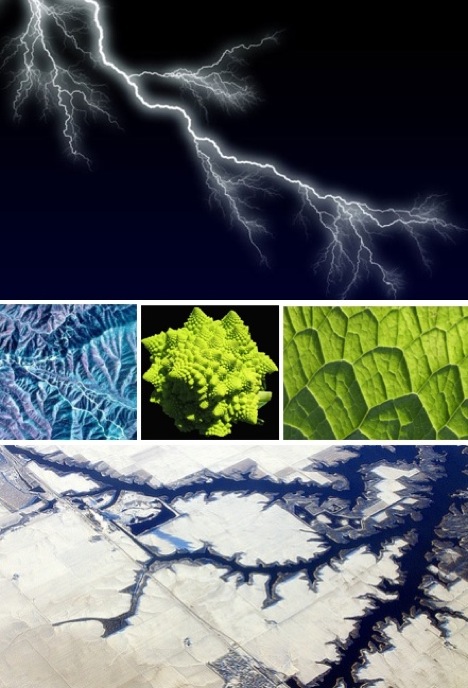
Fractals: they’re famously found in nature and artists have created some incredible renderings as well. Fractals are purely a wonder – too irregular for Euclidean geometry; iterative and recursive and seemingly infinite. They turn up in food and germs, plants and animals, mountains and water and sky. Here are seventeen stunning examples:
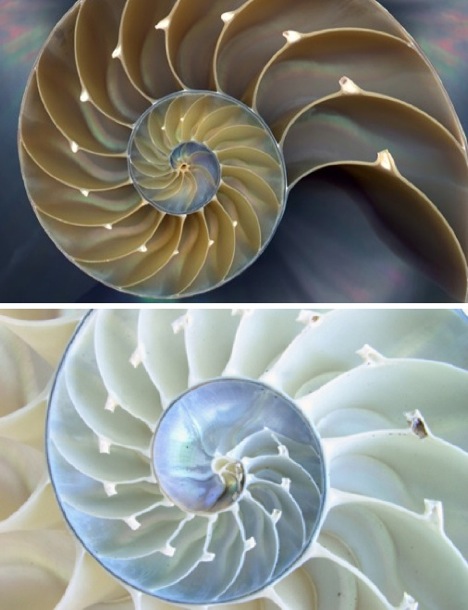
1. Sea shells
Images via Sustainable San Mateo and Designer
The nautilus is one of the most famous examples of a fractal in nature. The perfect pattern is called a Fibonacci spiral.
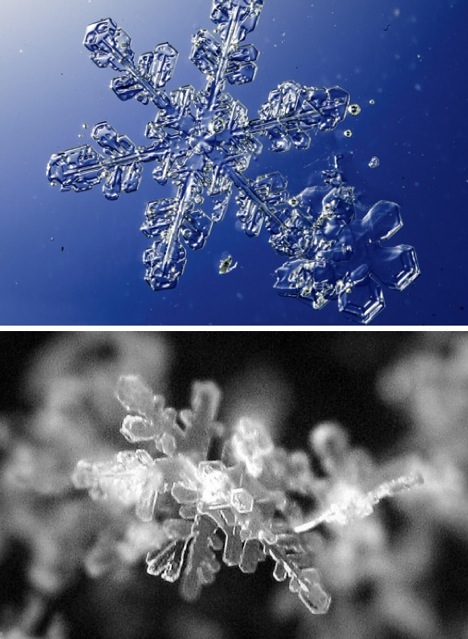
2. Snow flake
Images via Popular Science and Daily Dose of Imagery
3. Lightning
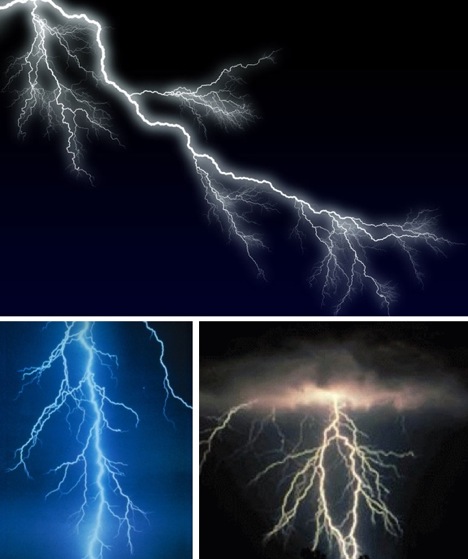
Images via howstuffworks, moonraker and Yale
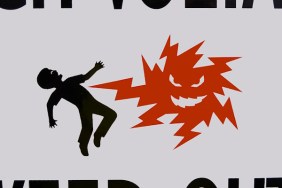
Lightning’s terrifying power is both awesome and beautiful. The fractals created by lightning are fascinatingly arbitrary and irregular.
4. Romanescu
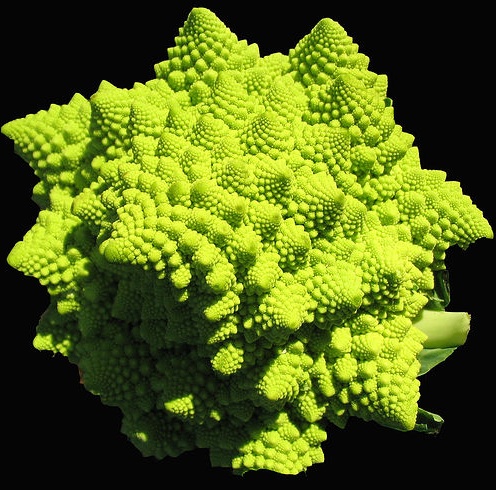
Image via docman
A special type of broccoli, this cruciferous and tasty cousin of the cabbage is a particularly symmetrical fractal. Cook it for your favorite mathematician.
5. Fern
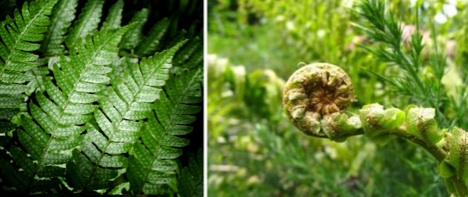
Images via red dirt road and travelblog
The fern is one of many flora that are fractal; it’s an especially good example.
6. Queen Anne’s Lace
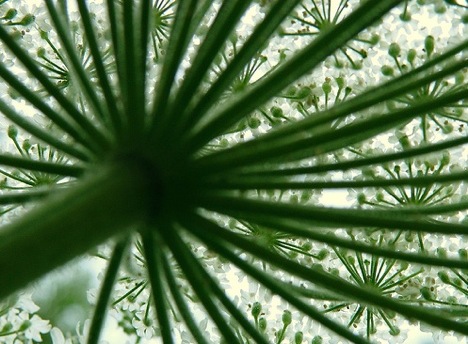
Image via Chrisjfry
The delicate Queen Anne’s Lace, which is really just wild carrot, is a beautiful example of a floral fractal. Each blossom produces smaller iterative blooms. This particular image was shot from underneath to demonstrate the fractal nature of the plant.
7. Broccoli
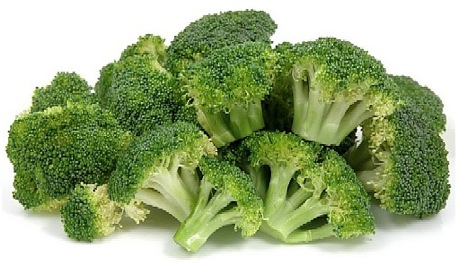
Image via American Feast
Though not as famously geometric as its relative the Romanescu, broccoli is also a fractal.
8. Peacock
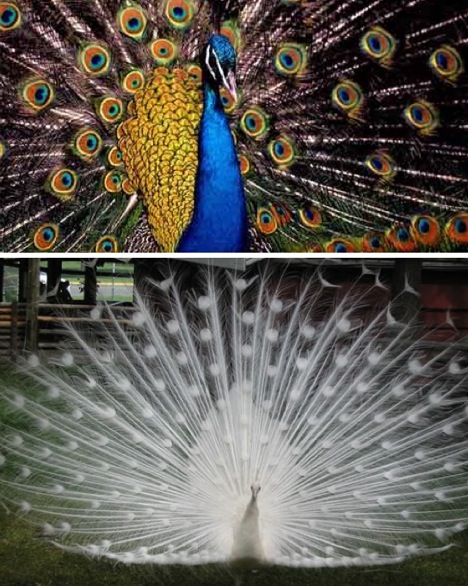
Images via National Geographic and Neatorama
Males of both the white peacock and standard peacock variety are resplendent examples of fractals in the animal kingdom. Trivia: the white peacock is not an albino.
9. Pineapple
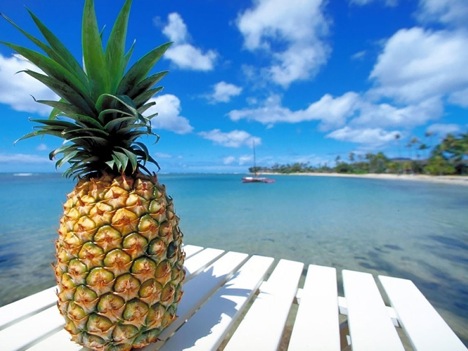
Image via Free Wallpaper
The pineapple is an unusual fruit that is, in fact, a fractal. Though often associated with Hawaii the fruit is a native of southern Brazil.
10. Clouds
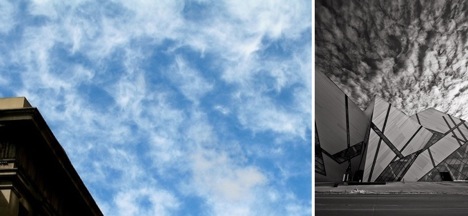
Image via daily dose of imagery and Allan Ferguson
Look outside your window – you may see a fractal cloud at any moment.
11. Crystals
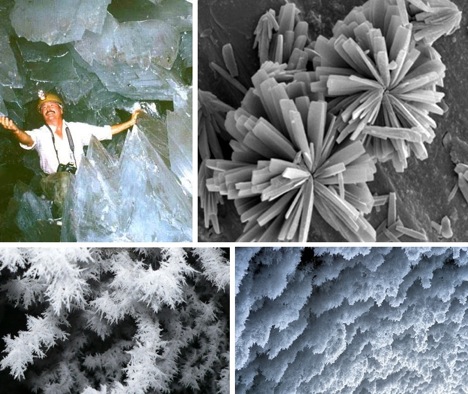
Images via gdargaud, Indigo Society, ESRF and Designer
Both chemically-formed crystals and ice and frost crystals are breathtaking examples of fractals in nature.
12. Mountain ranges
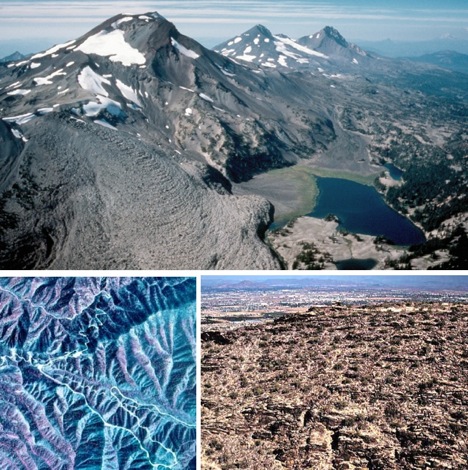
Images via USGS, Clemson and Gemland
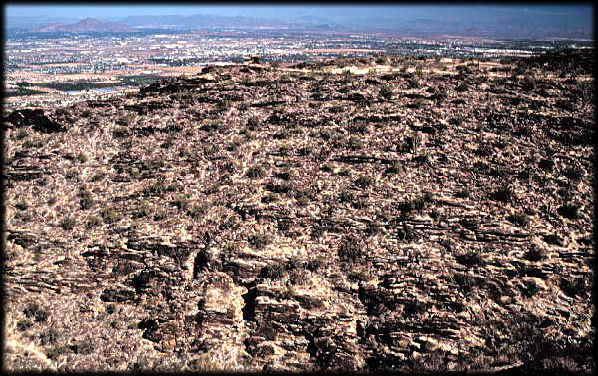
Both shorelines and mountain ranges are considered loosely fractal. These particular examples are beautiful.
13. Trees and Leaves
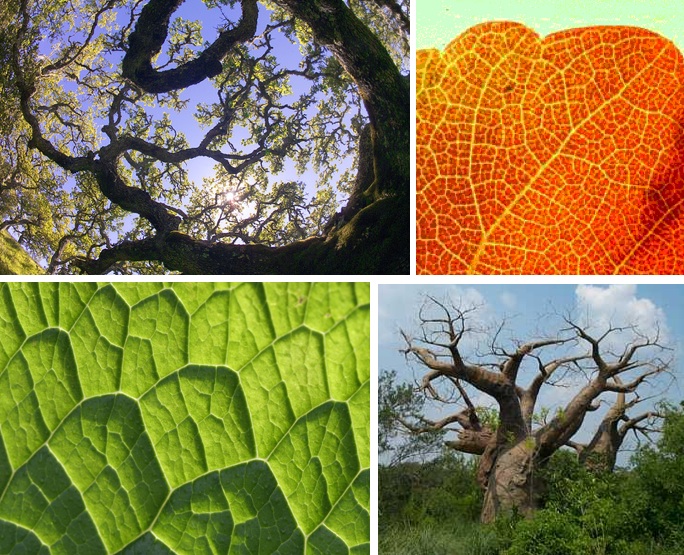
Images via timalbertson, Yale, enchanter, background wallpaper
From the macro view of a leaf to the span of a tree’s branches, fractals turn up frequently.
14. Shorelines
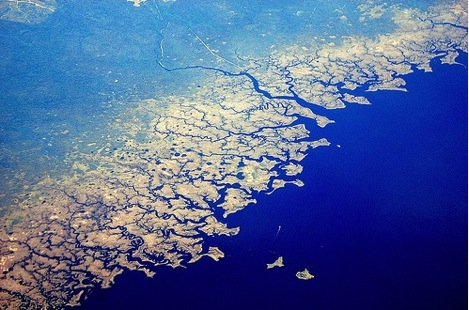
Image via Today is a good day
This stunningly complex fractal shoreline is none other than the pan handle of Florida.
15. Rivers and fjords
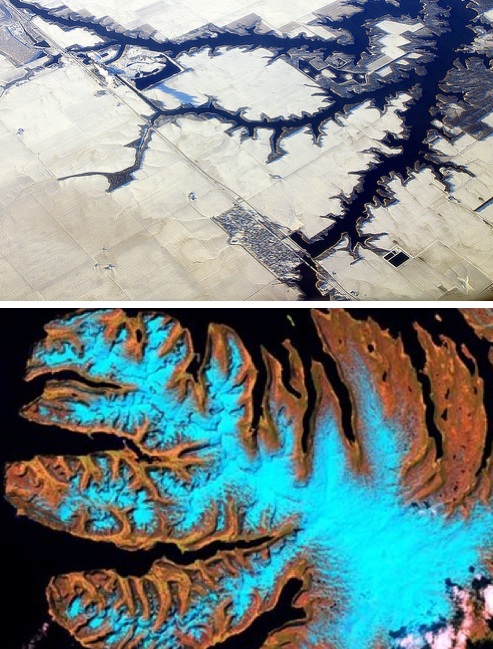
Images via Today is a good day and e-picworld
From the midwest of the United States to the icy fjords of Norway, fractals are often viewed by airline passengers – these particular travelers were savvy enough to snap photographs.
16. Sea urchins and sea stars
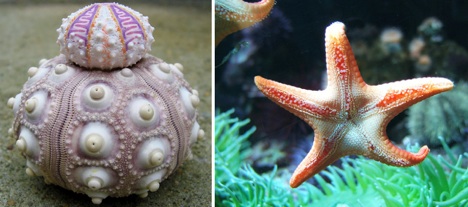
Images via jurvetson and curious animals
Sea urchins are compact, almost artistic little creatures; sea stars are more commonly referred to as starfish.
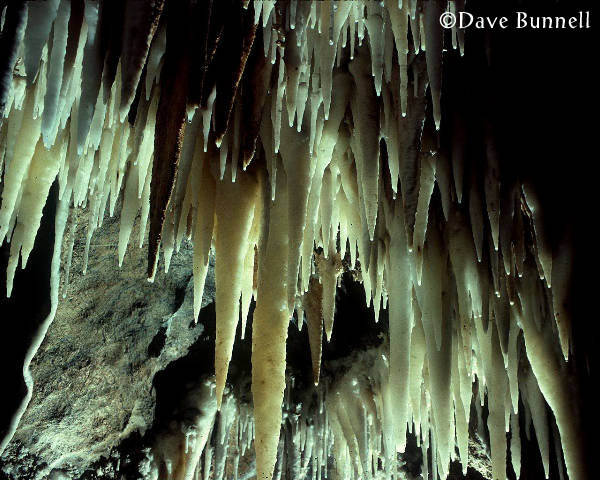
17. Stalagmites and stalactites
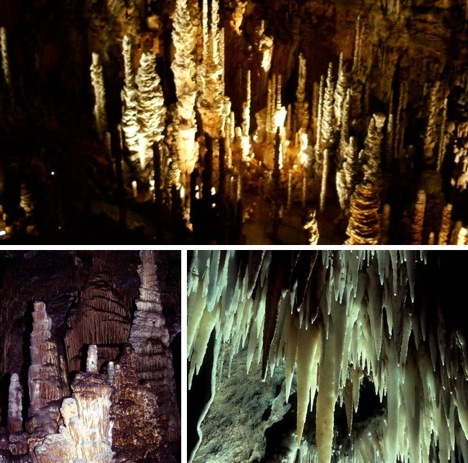
Images via wikimedia, Yale and Good Earth Graphics
By now you know that stalagmites shoot up from the ground while stalactites form overhead.
Amazing fractal configurations all. The links at the beginning of this post are highly recommended as they are a great start to exploring even more wondrous natural and artificial fractals.
If you are new to WebEcoist, click here to sign up for the RSS feed and take a look through our archives and galleries. Also be sure to visit WebUrbanist and see architecture, interiors, furniture and more design at Dornob.
-
Sharing:
-
Subscribe
-
Email to Friend
-
Del.Icio.Us
-
StumbleUpon


31 Comments
September 7th, 2008 at 8:01 pm
Wow! That was beautiful!
thank you…
September 7th, 2008 at 10:59 pm
god, the designer. we are mere specks of his mind, just re-arranging his models.
September 8th, 2008 at 2:23 am
By now you know that stalagmites shoot up from the ground while stalactites form overhead.
just wanted to add how I remember which is which,
the g in stalagmites and the c in stalactites stand for g for ground and c for ceiling
there is also a latin ref in the words somewhere but Iv’e forgotten that one
lovely photos :>))
September 8th, 2008 at 8:40 am
The unimaginable complexity of nature.
September 8th, 2008 at 8:44 am
highly informative. I guess people are fractals too.
September 8th, 2008 at 12:53 pm
Great pictures! However, several of these examples are not fractals. The usual mathematical definition (a noninteger Hausdorff dimension) is not true for the seashells, pineapples, peacocks, sea urchins and crystals. Self-similarity is not true for crystals, pineapples and peacocks. In particular crystals are very non-fractal since they look extremely different globally (a polyhedron) and locally (a plane). That said, many crystal masses do seem to have a fractal structure with facets on all scales.
In the end, these pictures are beautiful examples of complex systems. But it is hard to find any neat definition that sums up them all – most are created through recursive application of rules, but that is not enough to guarantee complexity, fractality or beauty on its own.
September 9th, 2008 at 4:38 pm
I learned about stalagmites and stalagtites in school around the same time that I started wearing tights (”hose”). I remember which was which of stalagmites and stalagtites by “tights comes down”. I’ve been able to distimguish between the two ever since.
September 10th, 2008 at 3:44 pm
It’s not god or design, it’s math and physics, but we’re still specks.
September 10th, 2008 at 6:04 pm
OMG how beautiful….Too bad “intelligent design” has been turned into a PI term.
September 13th, 2008 at 8:44 am
Wow! That is insane – so beautiful. I have heard about fractals, but I didn’t realise they could be found with such diversity in nature. Thank you!
September 28th, 2008 at 6:44 am
Beautiful pics! I have always thought the chambered nautilus shell is one of the most perfect structures is nature.
Thoughtful comment, mr/ms vubzcgois, if that is, in fact, your real name.
October 4th, 2008 at 7:42 am
I like the picture of the nautilus perfect, I’ve seen it once in our school library way back in my high school days and I was really captivatingly captivated by the perfect symmetry that the shell had developed over the years of the growth of the resident inside it.
November 2nd, 2008 at 6:42 pm
PBS bit re: fractals left me touched to the core.
The patterns repeating to the nth degree were
exquisite. My atheist/humanist self bowed to
the humans whose minds moved beyond Euclid
and Pythagoras to another realm. Stunning stuff!
November 12th, 2008 at 5:24 pm
i8unu83jd9nnr6o1
November 16th, 2008 at 9:17 am
It was great. I enjoyed it. Informative.
Tks.
December 4th, 2008 at 7:18 am
Awesome shots, thanks.
January 14th, 2009 at 9:29 pm
So beautiful! Too bad they’re just the result of random evolution!!!
January 18th, 2009 at 3:17 am
ZKsmos hi! how you doin?
January 23rd, 2009 at 1:26 pm
Beautiful! Fractals or not they are lovely pictures and wonderful examples of Gods handiwork! For all those people who have a problem with God they should read “The Shack” by Wm. Paul Young. The word fractal is mentioned in the book and is why I looked up the word. Anyway, for anyone interested – God knows you and is very fond of You!
March 15th, 2009 at 12:04 pm
these pictures are making me stick to this,. i am short of words to say awesome stuff
April 11th, 2009 at 6:06 am
I’m so siked I see this everywhere. Thought I was crazy. Amazing how fractals are everywhere. They’re also in and shadows and bright light. Amazing awesome website
May 15th, 2009 at 11:03 am
i have a math project due this upcoming wednsday and i have absolutally no clue how things like ferns and some roses are fractals because its not like they are just a pattern because they are actually like
May 30th, 2009 at 9:19 am
this is AWSOME! Thanks a tons
Trackbacks
What do you think? Leave a comment!